

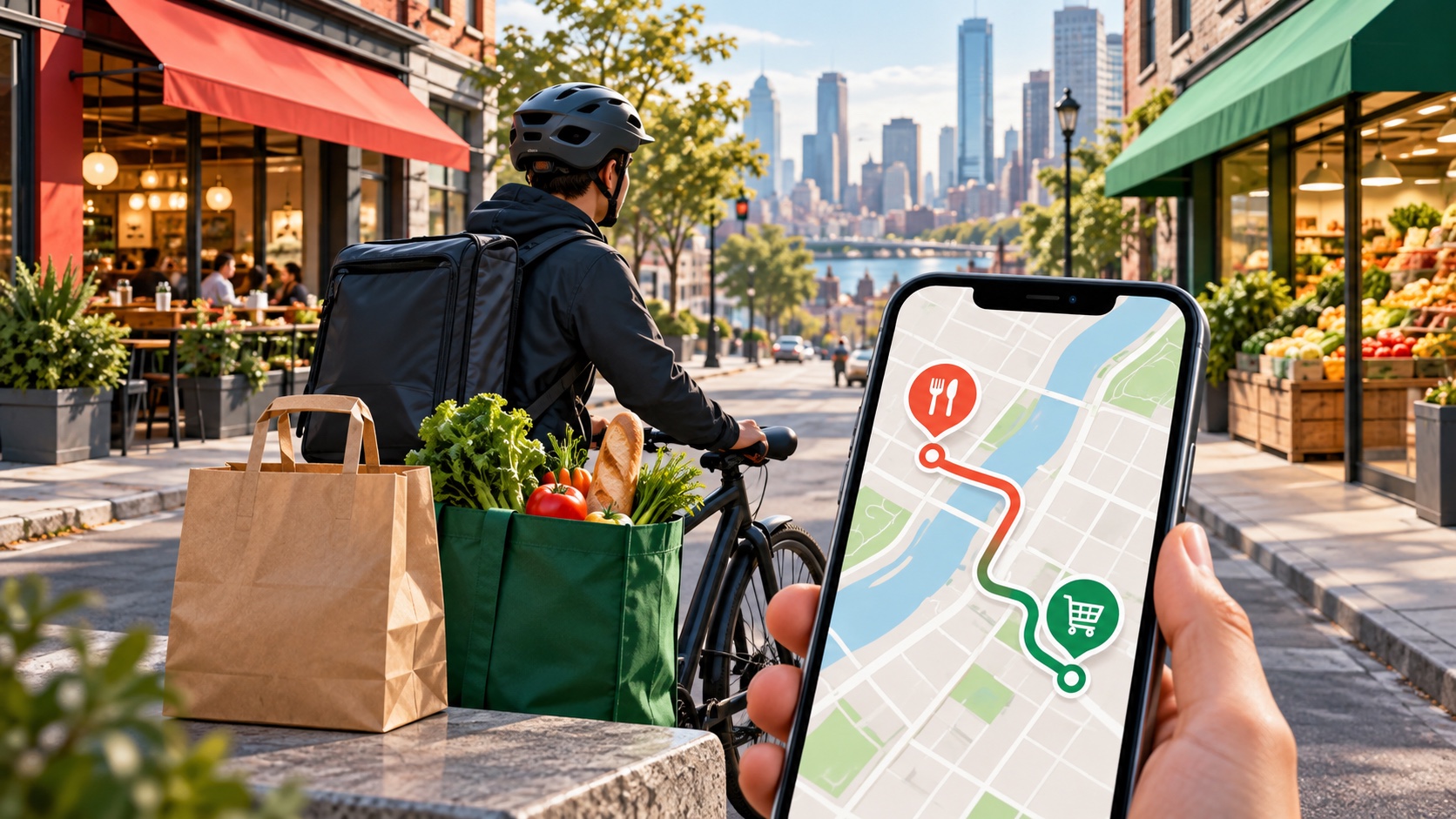
DoorDash is reportedly in advanced talks to acquire Instacart in a transaction that could value the grocery-delivery company at roughly $17 billion. If the negotiations produce a signed agreement, the combination would bring two of the largest names in restaurant and grocery delivery under one corporate roof and accelerate the industry’s move toward all-purpose local-commerce platforms.
Reuters reported Monday that a deal could be finalized as soon as Wednesday, citing a person familiar with the discussions, but cautioned that there is no guarantee the talks will succeed. The Wall Street Journal first reported the negotiations. Instacart declined to comment to Reuters, while DoorDash did not immediately respond.
That uncertainty is essential. Neither company has announced a transaction, described terms or filed merger documents. For restaurants, grocers, couriers and customers, the useful question is therefore not whether a deal is done. It is what the reported talks reveal about the direction of delivery.
The businesses overlap more than they once did
DoorDash built its name moving restaurant meals. Instacart became synonymous with having groceries picked and delivered. Those descriptions are still broadly true, but the boundary between the companies has narrowed.
DoorDash now delivers groceries, convenience items and other retail products in addition to restaurant orders. Instacart, meanwhile, is more than a consumer marketplace. It sells e-commerce technology to retailers, operates an advertising business and offers in-store tools intended to connect digital shopping with physical shelves.
The companies’ latest reported results show the scale involved. DoorDash said it processed 970 million orders and $33.1 billion in marketplace gross order value during the second quarter of 2026, with revenue reaching $4.5 billion. Instacart reported 90.3 million orders and $10.35 billion in gross transaction value for the same period, along with $1.04 billion in revenue. Those measures are not perfectly comparable, but they illustrate how much purchasing activity flows through each system.
For DoorDash, an acquisition could add deep grocery-retailer relationships, white-label store technology and a mature advertising operation. For Instacart, DoorDash could provide a larger delivery network, more restaurant demand and a broader consumer membership ecosystem. The strategic appeal is easy to see even before the companies explain their own rationale.
What restaurants and grocers would watch
A combined company could make it easier for customers to place more of their local orders through one app or membership. A household might order dinner on Monday, groceries on Tuesday and convenience items later in the week without changing platforms. That could increase ordering frequency and create new ways to cross-promote merchants.
Scale could also support denser courier routes, faster fulfillment and a larger audience for advertising. A restaurant might gain exposure to shoppers who primarily opened an app for groceries, while a grocer could reach customers who began with takeout.
The tradeoffs would matter just as much. Restaurants and retailers would want to know whether a larger platform changes commissions, advertising costs, placement rules, access to customer data or the bargaining power of individual merchants. Independent operators already have to weigh the reach of delivery marketplaces against fees and the loss of a direct customer relationship. Consolidation could sharpen that calculation.
Grocers would also examine what happens to Instacart’s enterprise products. Retailers that use the company’s software or advertising tools may compete with one another while depending on the same underlying platform. Any transaction would need to address data protections, product road maps and how merchants are treated across the combined network.
Couriers would watch pay formulas, scheduling, order density and worker classification. More orders on one network could create efficiency, but scale alone does not guarantee better earnings or working conditions.
A deal would face regulatory scrutiny
Any agreement of this size would be subject to antitrust review. The Federal Trade Commission and Department of Justice say their merger analysis is forward-looking and examines whether a transaction may substantially lessen competition. Their current guidelines specifically address multi-sided platforms, including competition between platforms, competition on a platform and efforts to displace a platform.
That framework is relevant because delivery businesses connect several groups at once: customers, merchants, advertisers and workers. Regulators could examine restaurant delivery, grocery delivery, retail technology, local fulfillment or other narrower markets. That does not mean a challenge is certain. It means the review would likely reach beyond a simple comparison of restaurant meals versus grocery baskets.
The companies could argue that their strengths are complementary and that combining them would create a more effective competitor to Uber and large retail platforms. Critics could point to fewer independent marketplaces and increased leverage over merchants. Until terms are public, both cases remain incomplete.
The next signal is confirmation, not speculation
The reported timing means a formal announcement could arrive quickly, but talks can also be delayed or abandoned. Investors reacted immediately to the report, with Instacart shares rising and DoorDash shares falling Monday, but market movement is not evidence that a transaction will close.
For restaurant and grocery operators, the practical response is to keep control of the channels they already own. A reliable direct-ordering path, accurate customer records, clear delivery economics and diversified marketing are useful whether this deal happens or not.
The larger lesson is already visible: food delivery companies no longer want to handle only one meal or one basket. They want to become the operating system for local commerce. A DoorDash–Instacart combination would be the clearest expression of that ambition yet.