

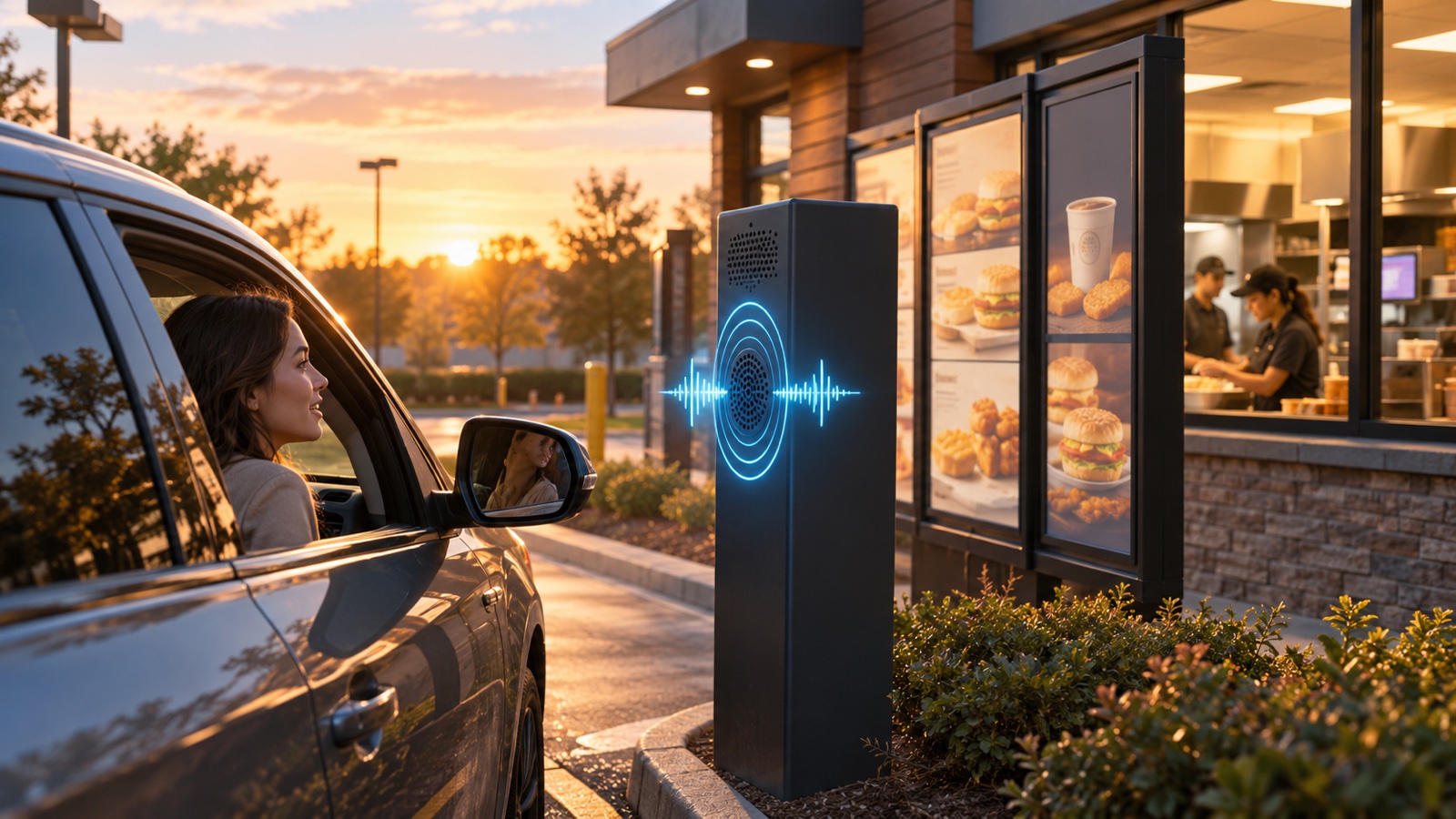
Bojangles is preparing to take automated drive-thru ordering from a large pilot to a systemwide operating tool.
The chicken-and-biscuits chain and technology provider Hi Auto have extended their agreement, with plans to make the voice-ordering system known as Bo-Linda available across Bojangles’ network of more than 890 restaurants. Nearly 500 locations already use the system, according to an October 22 report from Nation’s Restaurant News, and the companies expect more than 100 additional restaurants to adopt it by the middle of 2027.
That scale makes the rollout a notable test of whether restaurant voice AI can move beyond demonstrations and limited pilots. Drive-thru orders include modifiers, substitutions, inventory questions, background noise and rushed customers—conditions that make conversational accuracy more difficult than a simple chatbot exchange.
What Bo-Linda is designed to do
Bojangles describes Bo-Linda as a cloud-based ordering assistant built specifically for the drive-thru. The company’s public product page says the system is already available in more than 450 restaurants and can explain menu items, handle modifiers, flag unavailable products and accept orders in Spanish. Employees can step in when the software needs help.
The figures disclosed by the companies show both the volume and the remaining role for human oversight. The partners say Bo-Linda processes more than 1 million orders a week and reports a 98% order-completion success rate. Bojangles separately says more than 96% of orders handled by the system do not require employee intervention. Those are company-reported measurements, and they describe different parts of the ordering process rather than an independent audit of accuracy.
The expansion also includes deeper links to restaurant operations. New tools are expected to connect orders with Global Payments’ Genius point-of-sale system, vary suggested add-ons according to drive-thru traffic, and help match vehicles to orders in two-lane restaurants. Existing recommendations can already change with factors such as time of day, weather and inventory.
The bigger restaurant question
For operators, the promise is not simply replacing the person wearing the headset. A reliable voice assistant could allow employees to spend more time on food preparation, payment, handoff and guest recovery during a rush. The value disappears quickly, however, if errors increase remakes, slow the line or frustrate customers who want a person.
Other large restaurant brands have adjusted or slowed voice-AI tests after mixed customer reactions and uneven performance, Nation’s Restaurant News reported. Bojangles’ decision to expand therefore matters because it puts the technology into a broad mix of franchised and company-operated restaurants rather than a small set of controlled locations.
Several questions will determine whether the larger deployment works:
- How quickly can an employee take over when the system misunderstands a customer?
- Does accuracy hold up across accents, languages, complex orders and noisy lanes?
- Are speed and average-check gains offset by complaints, remakes or abandoned orders?
- What information is retained from voice interactions, and how clearly is that disclosed?
- Can franchisees measure results consistently across different point-of-sale and lane configurations?
Bojangles began testing Bo-Linda in 2024. The next phase will show whether the operational benefits the companies report at hundreds of restaurants remain consistent across the entire system—and whether diners view automated ordering as faster service or another obstacle between them and a meal.