

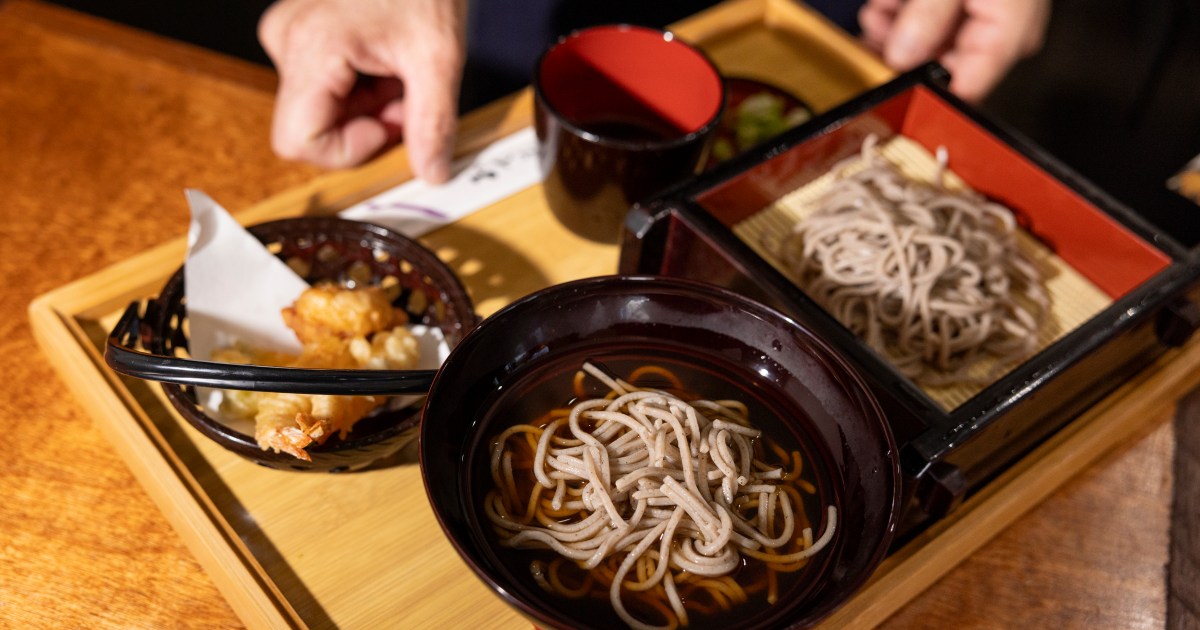
Before sitting, you place your order at a tablet on the front counter. The choices start with either hot or cold soba, plus the option to add sides. The most uncommon offering is warabimochi. The Japanese wagashi, or confection, is made from a large fern called bracken and, like buckwheat, has the benefit of being naturally gluten-free. Coated in toasted soybean flour called kinako, it’s almost flavorless but delicately sweet and nutty. Other accompaniments include shrimp or vegetable tempura and deep-fried vegetable fritters called kakiage.
By the time you’ve settled in, scanned the QR code on the table, and read the instructions for how to eat soba the Japanese way (slurping is not only acceptable but encouraged), your food will likely have arrived. I inhaled the nutty, al dente noodles, which were bathed in a light but umami-packed broth made with bonito and kombu, unabashedly slurping as instructed. Between loud gulps of soup, I dunked hot, tempura-battered squash and shrimp into my bowl, the airy batter yielding to the broth and steam. I waited 20 minutes for a seat, and devoured the entire meal in less than 12.
Nihira prefers cold soba, as hot broth can cook the noodles past their ideal texture. But in a city as foggy as San Francisco, he felt he had to offer hot options too. Eventually, he plans to expand the menu to reflect the restaurant’s name, a portmanteau of “soba” and “katsu,” the popular Japanese fried chicken cutlets.
Whenever he does, I’ll be willing to wait.
This article was originally published by a sfstandard.com . Read the Original article here. .