

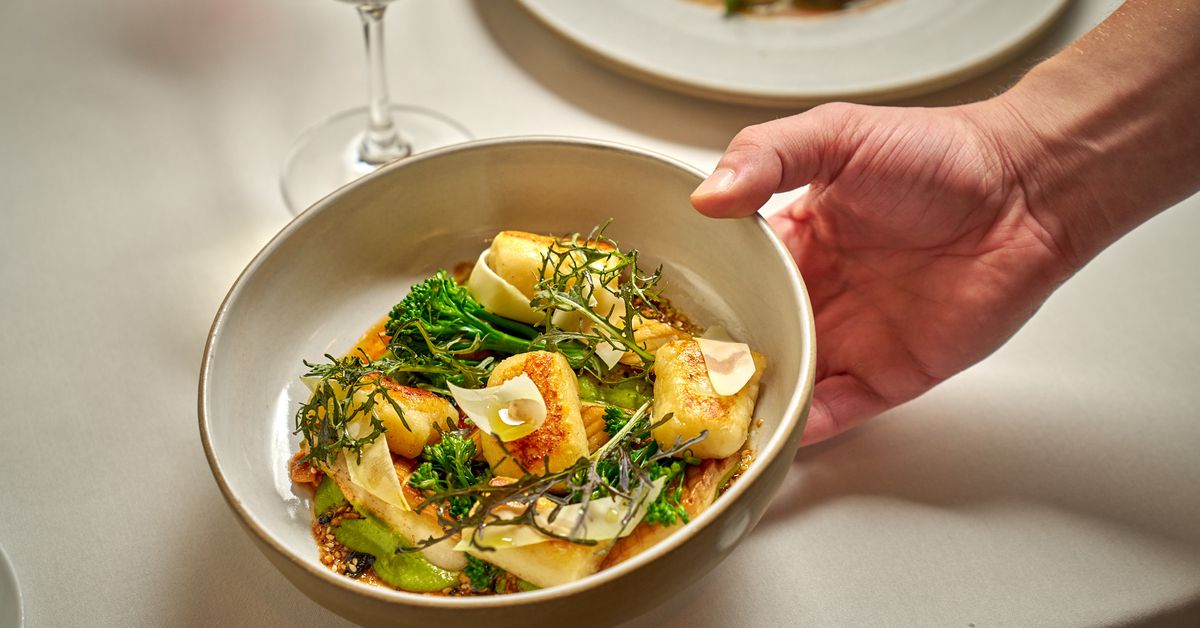
New York City boasts an unparalleled wealth of restaurants, yet surviving in the city’s fiercely competitive culinary landscape remains a challenge. Economic pressures, rising food costs, and shifting dining trends test the endurance of even the most iconic venues. Despite these obstacles, a resilient cadre of restaurants has defied the odds, some tracing their roots back over a century.
In 2024, several renowned establishments mark significant milestones. For No Taste Like Home, we’re highlighting a handful of influential favorites spanning four decades: restaurants that have shaped the fabric of today’s dining culture in NYC.

THE ERA
In 1994, Rudy Giuliani became mayor, the Rangers won the Stanley Cup, and four were convicted in the first World Trade Center center bombing. Daniel Boulud’s one-year-old eponymous restaurant received its first four-star review; Andre Soltner’s Lutece was sold; and Nobu opened, making miso cod a sensation. A young unknown named Eric Ripert took over the kitchen at Le Bernardin after the death of chef and partner Gilbert Le Coze. The new mayoral administration put a damper on clubs by enforcing the city’s antiquated “no dancing” Cabaret Laws, as restaurants became essential on the nightlife scene.
Gramercy Tavern
July 1994
42 E. 20th Street, between Broadway and Park Ave South, Gramercy

How it started
Before he built the Union Square Hospitality Group, in the summer of 1992, Danny Meyer already had one success with seven-year-old Union Square Cafe. He wasn’t sure if he wanted to open another, but when Meyer ran into Tom Colicchio, then chef at Mondrian, at the Aspen Food & Wine Classic, he wondered if lightning could strike twice.
“Tom confided in me that Mondrian was going out of business,” Meyer recalls. “My wife was there, and she said, ‘You two should open a restaurant together.’ Tom’s face brightened up.” The duo envisioned a dual concept with two menus: one for the casual tavern room and another for the upscale back room. “I liked the idea that they would both have the same expectation of hospitality and service and quality, but for two different experiences.”
Opening night, according to Meyer
“It was absolutely awful. Peter Kaminsky did a cover story for New York magazine. The issue came out literally the day we opened. It was a big white cover, and right in the middle was a Gramercy Tavern matchbox underneath four gold stars. On top, it said: “The Next Great Restaurant?” It was basically like putting a bull’s eye on our back. [It] was that era’s version of clickbait. It just invited critics to come in and answer the question and say, ‘No, it’s not New York’s next great restaurant.’ It was hard. I definitely regretted opening a second restaurant.”
The menu, then and now
In 1994, the prix-fixe dinner in the dining room was $48, with menu items like smoked duck pastrami and braised lamb lasagna. Today, the prix-fixe is $168, changing seasonally with dishes such as roasted duck breast and bacon and lamb with saffron. In the Tavern Room in 1994, entrees ranged from $19 to $28. In the Tavern Room today, they range from $33 to $45.

Why it endures
Gramercy Tavern eventually earned rave reviews, a Michelin star, and a fiercely loyal clientele. The dual concept worked so well that Meyer again installed the idea at Tabla and the Modern. Along with Colicchio, Gramercy also jump-started the careers of chefs Claudia Fleming (Daily Provisions), Marco Canora (Hearth), Suzanne Cupps (Lola’s), and others who are returning for the restaurant’s 30th-anniversary “Tavern Takeover” dinners. Current executive chef and partner Michael Anthony, who at 18 years has held the longest tenure in the kitchen, credits Gramercy with leading the way to change the state of restaurant work culture. “Gramercy proves that the restaurant industry is not a pirate ship: that the restaurant should not be a place for people who behave poorly. It took a long time for the media landscape and for people to completely get that and how groundbreaking that was,” Anthony says.
Though he will continue to helm Gramercy Tavern, Anthony will soon lead the restaurant at another NYC icon: the Waldorf Astoria.
This article was originally published by a ny.eater.com . Read the Original article here. .