

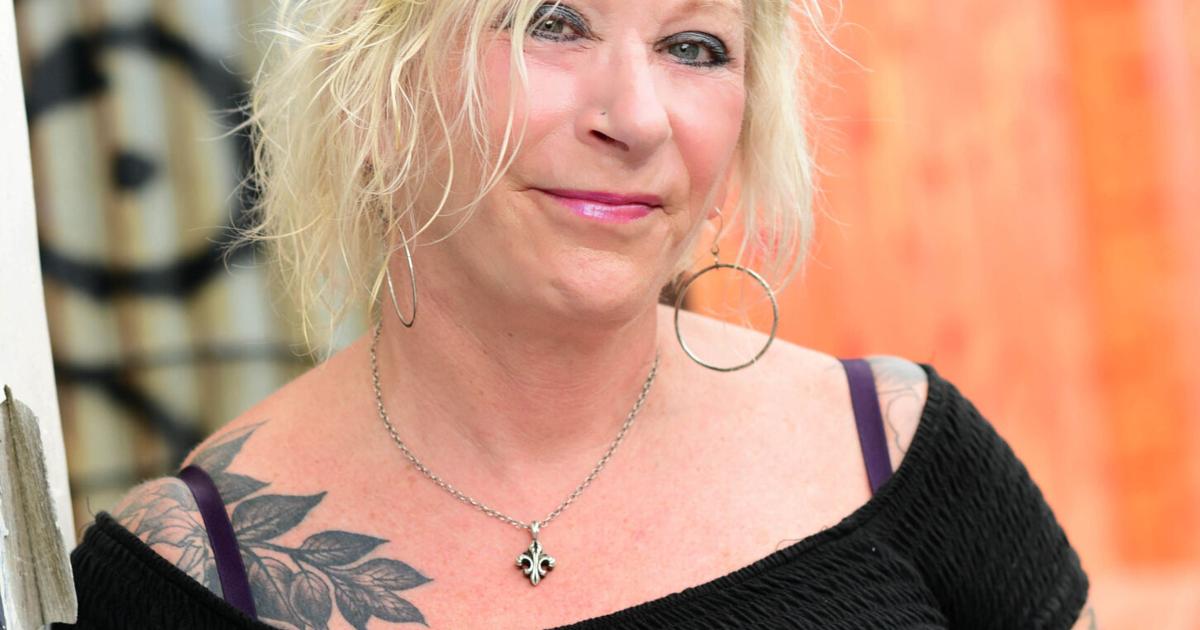
Beth D’Addono has written about food and travel for Gambit, USA Today, the Los Angeles Times, Eater and more. She’s also a past president of New Orleans’ chapter of Les Dames d’Escoffier, a philanthropic group dedicated to the restaurant and hospitality world. D’Addono recently published “City Eats: New Orleans,” the second book in a new culinary series from Harper Collins. The book features profiles of more than 50 New Orleans restaurants, plus recipes and sidebars about the city’s cuisine. D’Addono will do a series of happy hour book events with featured chefs, and upcoming events include Aug. 21 at Antoine’s, Sept. 11 at The Bower with Marcus Woodham and Oct. 3 with Sophina Uong at Mister Mao. Read her weekly restaurant features in Gambit and find more on Instagram, @bethdaddono.
Gambit: How did you want to cover New Orleans in the book?
Beth D’Addono: They gave me the name of the book and said it should be about restaurants. Then they left it up to me.
It’s not my first book. I’ve written cookbooks and books about New Orleans. There are recipes in it, but I don’t think it’s a cookbook. People who like to cook are going to enjoy cooking them. But to me, it’s a story of how our dining scene has evolved in a really positive way.
I started this project at the very end of 2022. Half of these restaurants did not exist before 2020. That was a touchstone. It was amazing that people started opening restaurants (during the pandemic). It was so tough on restaurants and hospitality in every single way. It’s given me access to so many stories that are so inspiring. Some places were in the process of opening. But with Zee’s Pizza, (Zander White) was working in the film industry, and he made really good pizza. So when the film industry was shut down, he switched.
There are places like The Bower, which opened a week before the shutdown. That is a story about how they reopened. I love the story about Chapter IV and Dook Chase and the family legacy being continued.
Gambit: How do you see the city’s mix of old and new?
D’Addono: New Orleans has its own fully formed cuisine. You can’t take that away. It’ll never go away. There’s also been a lot of talk about colonial food and how a place is represented or how the food is credited. We always had restaurants that were informed by other cultures. Our cuisine was not just informed by the French or the Spanish. We know that, but I thought this was an opportunity to cast light on a more vibrant conversation that is happening around the table and what we are eating.
Black-owned restaurants have always been around in New Orleans, but it came into more clear focus because of the pandemic and because of George Floyd’s murder and because of Black Lives Matter. There are chefs like Manny January, who worked at Galatoire’s for like 20 years. He decided, “This is my chance. I am going to open my own place.” He opened 8 Fresh Food Assassin.
I don’t think the Frank Brigtsens are going to go away. Now, they coexist with the Manny January and Sophina Uong (at Mister Mao) and Ana Castro (formerly of Lengua Madre). I think Nina (Compton) is a trailblazer in that way.
I love the Banh Mi Boys story. Peter Nguyen’s mother did not want him to have that business. He was going to do it on the side of a gas station. When he told her that he would pay her rent, she said, “OK fine, go ahead and make all these crazy banh mis.”
The plant-based stuff may be surprising. Before I moved here, I had been coming here since 1991, and there were never so many vegetarian options. Now there are multiple options.
I want to represent a lot of different voices in the book.
Gambit: What are some of the recipes you decided to include?
D’Addono: On the traditional side, I have a whole sidebar on old-school Creole and new-school Creole. You can’t not talk about Commander’s Palace and those places. They’re institutions. Antoine’s is the oldest restaurant in America. As far as the recipes, the chefs made choices. But I think there’s an interesting cross-section of traditional. There is gumbo from Donald Link. Dee Lavigne makes a really delicious bread pudding with rum sauce. It’s fantastic. There is speckled trout meuniere from Arnaud’s. If people want to cook traditional, there are plenty of options for that.
There are a lot of women chefs in there, which is really important to me. I wanted Queen Trini Lisa in there. What Martha Wiggins is doing at Cafe Reconcile is profound. Food can be profound in what it can accomplish. At Del Porto across the lake, Torre (Solazzo) is an amazing chef, and her Italian food is delicious. I think the book shows the breadth of what we have at our disposal.
The doro wot from Addis NOLA is so delicious. It takes time. It was described to me as a special occasion food. I can understand why. There is a lot of chopping and peeling. It’s all based on cooking down this onion mix, and spices and berbere spices. It was so satisfying to eat it.
This book is perfect for people who love food and love to dine. They may not be a home cook, but they love restaurants and trying new food. They can read the stories of some of these chefs. Our hospitality community is strong. There is a lot of support and interconnection. That is something I think readers will feel. This industry and the heart that’s in it gives me hope and joy all the time.
This article was originally published by a www.nola.com . Read the Original article here. .